
Imagine you’re really excited about a new idea for a collaborative project. You send an e-mail about it to a friend who you just know is going to be as excited as you. You’re waiting on pins and needles for a response, checking your inbox every hour. A couple of hours pass, then a couple more. You’re getting stressed and anxious, waiting on the edge of your seat for a reply. The next day goes by, and another day. You’re very confused about why you haven’t received a response. Why isn’t your friend writing you back? Doesn’t she like you? Is she upset with you? What’s wrong?
Has this ever happened to you? It’s happened to me many times. My Autopilot System goes into overdrive, imagining various negative scenarios and sending out stress-inducing hormones. Such catastrophizing is a common type of thinking error, one that research shows undermines mental and physical wellbeing.
Another thinking error in this scenario is that one’s friend will share the same opinion that you do about your new idea. Studies on a cognitive bias called the “false consensus effect” indicate that our Autopilot System significantly overestimates the extent to which others agree with our opinions. This is especially true for those close to us, such as our friends and family. As a result, we make mistakes when we use our intuitions to predict the behavior of others around us, including our immediate social circle.
However, the false consensus effect applies more broadly as well. Our gut reactions tend to perceive “the public” as a whole as sharing our perspective. This problem is especially problematic when it causes us to overrate substantially the extent to which others will agree with our political opinions. Such overestimation undermines our ability to engage in healthy political discussions and contributes to political polarization. No wonder we don’t do well as intuitive psychologists !
So how can we work against the false consensus effect? First, remember a previously-discussed strategy, namely that our mental maps never match the territory of reality. And our mental maps certainly do not match the mental maps of others!
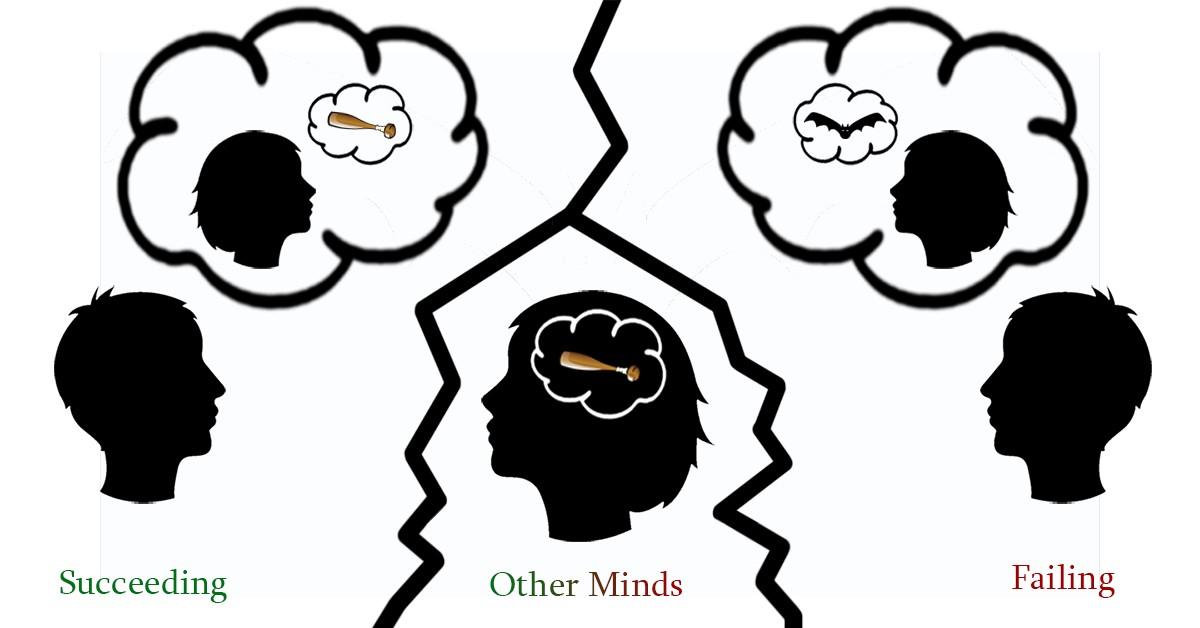
To keep the latter fact in mind, here is a very useful mental habit to adopt: avoiding “failing at other minds.” What does that mean in practice? Essentially, when trying to imagine how other people think about the world, take a moment to stop and remember that their perspective is inherently different from your own. This is a specific case of a broader de-biasing strategy of imagining the opposite, in this case taking the perspective of the other person. And why is this helpful? Well, our intuitive theory of mind, the way we understand the minds of others, tends to model others as ourselves. Our Autopilot System perceives others as understanding the world and having the same idea of what is true as we do. Internalizing the mental habit of avoiding failing at other minds helps remind us of this problematic tendency, and work against it. Through developing this mental habit, we can be elephant whisperers and retrain our Autopilot System to have a more intentional approach to predicting the thoughts, emotions, and behaviors of others. Thus, we can evaluate reality more clearly and gain greater agency by making more effective decisions that help us reach our goals. We can succeed at other minds!
Now, what are the strategies for most effectively learning this information, and internalizing the behaviors and mental patterns that can help you succeed? Well, educational psychology research illustrates that engaging with this information actively, personalizing it to your life, linking it to your goals, and deciding on a plan and specific next steps you will take are the best practices for this purpose. So take the time to answer the questions below to gain long-lasting benefit from reading this article:
- Are there any instances where catastrophizing has negatively influenced your wellbeing?
- Has the false consensus effect ever steered you wrong in personal interactions? What about in your predictions of public opinions and political engagement?
- In what ways, if any, do you think the mental habit of avoiding failing at other minds can help you have a better life and gain greater agency?
- If you think it can be beneficial for you, what kind of plan can you make and what specific steps can you take to internalize this mental habit?