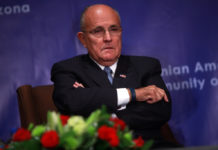


Donald Trump will be the Republican presidential nominee. At least, so it appears from all the media attention paid to his candidacy. A recent analysis found that he has received over 50% of the summer media coverage of Campaign 2016.
Yet Trump’s position in the polls for the Republican nomination is far lower than the 50% mark, hovering around the 20-30% range. Another factor against him is that his negative ratings are very high in the polls, meaning that many people hold an unfavorable opinion of him. Likewise, the Republican establishment is set against him. As a result, the large majority of political analysts suggest that there is a low probability of Trump being the Republican President nominee.
So why does it appear from the media attention that Trump is cruising to win the nomination? Now, there are many who blame the media itself for its supposedly excessive coverage of Trump, with other Republican presidential candidates such as Rand Paul even attributing Trump’s rise in the polls solely to the media focus.
It is easy to blame the media, but is it fair to do so? Here is the dirty little secret – the media offers what the viewers want to see. Trump knows what the viewers want and he gives it to us. We should blame ourselves, and specifically the emotional part of our brains, for the media coverage of Trump.
Intuitively, we feel our mind to be a cohesive whole, and perceive ourselves as intentional and rational thinkers. Yet cognitive science research shows that in reality, the intentional part of our mind is like a little rider on top of a huge elephant of emotions and intuitions. This is why researchers frequently divide our mental processes into two different systems of dealing with information, the intentional system and the autopilot system.
The autopilot system corresponds to our emotions and intuitions. Its cognitive processes take place mainly in the amygdala and other parts of the brain that developed early in our evolution. This system guides our daily habits, helps us make snap decisions, and reacts instantly to dangerous life-and-death situations, like jumping out of the way of a fast-moving car, through the fight-or-flight response. However, while the snap judgments resulting from intuitions and emotions usually feel “true” because they are fast and powerful, they sometimes lead us wrong, in systemic and predictable ways.
The intentional system reflects our rational thinking, and centers around the prefrontal cortex, the part of the brain that evolved more recently. According to recent research, it developed as humans started to live within larger social groups. This thinking system helps us handle more complex mental activities, such as managing individual and group relationships, logical reasoning, probabilistic thinking, and learning new information and patterns of thinking and behavior. While the automatic system requires no conscious effort to function, the intentional system takes deliberate effort to turn on and is mentally tiring. Fortunately, with enough motivation and appropriate training, the intentional system can turn on in situations where the autopilot system is prone to make errors, especially costly ones.
Trump knows how to play to how our brains are wired. He makes provocative statements about policy issues such as immigration, and about other presidential candidates, designed to appeal to our emotions. As a result, his statements are very well tuned to trigger our autopilot system, and get our attention.
No wonder that Trump gets so much media coverage. The media know that the viewers want emotionally oriented stories, and are much more likely to read newspapers and watch shows with emotionally appealing content. Coverage of Trump’s provocations sell much better than more serious and weighty matters such as policy statements made by other candidates. The phenomenon of us paying excessive attention paid to emotionally dominant information is called attentional bias, and is one of the autopilot system’s predictable errors.
Answer quickly: are you more afraid of an airplane crash or a car crash? Most people are much more afraid of an airplane crash. However, according to the National Safety Council, the odds of dying in a motor vehicle accident are 1 in 98 for a lifetime, and air travel accident 1 in 7,178 for a lifetime. However, our emotional system is much more triggered by the tragic airplane disasters we learn about rather than car crashes. We should be much more afraid of driving than air travel, just as we should be much more skeptical of the chances of Trump being the Republican presidential nominee. Yet that is not how our brains are wired.
So how do we fight against this pull of emotional appeal to know the truth about what actually matters and is most likely to happen, as opposed to falling for attention bias? First, remember that our brain is wired for emotional appeal, resulting in the strong focus on people like Trump, and situations like airplane crashes. Try to notice how information gets to you, and ask yourself whether this information might have resulted from emotional appeal. Then, try to evaluate the probabilities involved to have the clearest understanding about the reality of the situation and likelihood of future events.
While evolution wired our brains for Trump, we can train ourselves to take full advantage of our intentional system’s capacities to know the truth about what matters and succeed in life.